
In the app today
- Ownership proof by DNS TXT record or well-known file
- Signed scope PDF, with signer, acceptance time and file hash
- Requests and credit ledger, kept apart by account and market
- A public sample desk

Pentforge is a security assessment workspace from Norcode SRL, a Romanian company serving the EU. Today it holds the proof that you may test a target. Testing, finding review and remediation support are proposed separately for each engagement.
We assess only assets you own or are authorised in writing to test.
Alpha, limited access. You can prepare a request and view labelled sample records. Submitting stores a queue reference and does not start a live scan.
Signer, acceptance time and file hash
DNS TXT record on atlas.example.test
Session cookie settings, engine draft
Owner, due date and verification checks
Nobody has validated this finding
Cannot close without it
Sample records are labelled. Planned items stay listed as planned.
The record behind each question, and how far it has got.
| Question | Record | Status |
|---|---|---|
| Who authorised this test? | Signer, email, acceptance time, file hash | In the app |
| Do they control the target? | Proof method and verification time | In the app |
| How old is this finding against its SLA? | Age and SLA on one component | Sample only |
| Who owns the fix? | Owner and due date | Built, not connected |
| Who validated it, and what did they change? | Practitioner name, date, before and after text | Built, not connected |
| Did the fix work? | Written checks and a recorded result | Sample only. No retest runs |
| What did the tooling touch? | No run record. The app adapter connects to no engine | Not available |
| What is our exposure by owner across the estate? | No organisation view | Not available |
The app adapter remains network-free. None of this is a live customer deployment.
The signed-in overview shows your saved requests, their status and the applications assigned to your account. The graph here is synthetic. Access is limited while we verify integrations.
Open the alpha workspace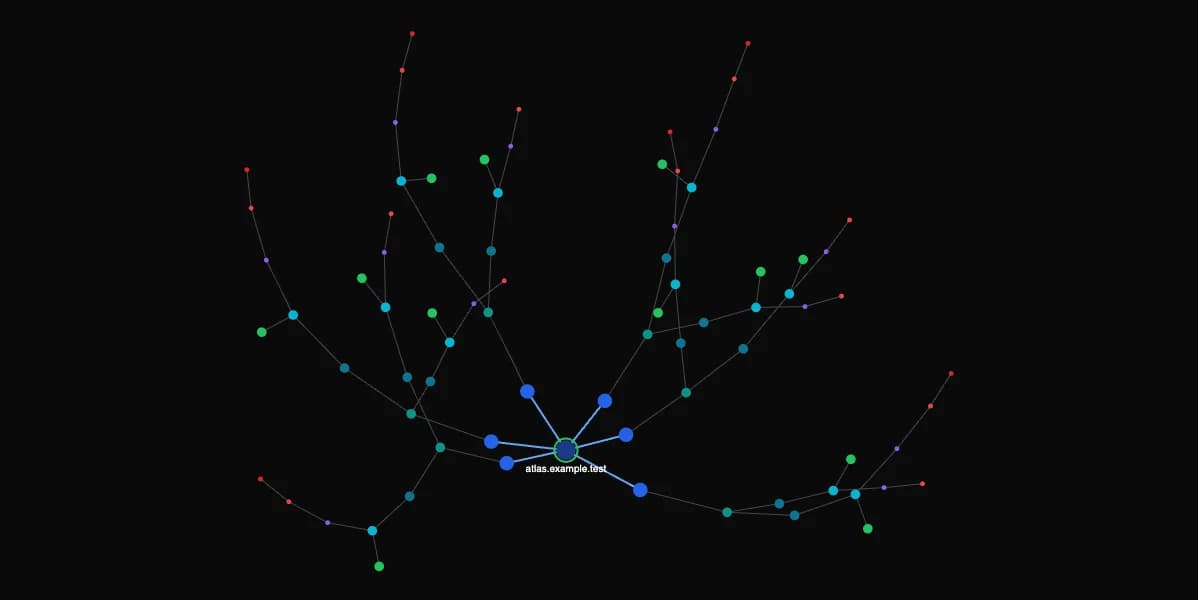
This node is invented. Its category shows how RedAmon represents related assets and observations.
Pick a workflow to see what we would review: retrieved documents, agent permissions or a model release. Nothing here tests a system.
A documented boundary between your data, the model and its users.
Explore the AI security workflowA finding needs an owner, a response and proof the response worked. Assessment, remediation and maintenance each get their own written scope.


Name the assets, the testing depth and the reviewers. Prove ownership and attach the signed scope.
A web, API, network or cloud-configuration assessment of assets you own or may test under written authority. The proposal names the testing depth and who reviews the findings.
Read the authorised testing policyTurn a finding into defensive steps, references and verification checks. If your team wants help delivering a fix, the proposal sets out who does what.
See the remediation approachAn optional retainer for backlog reviews, evidence updates and agreed retests as your systems change.
How engagements are scopedWe start from a defined backlog, agree who does the engineering, and decide up front what evidence will show each change worked.
Example guidance for an application you control. No customer system was tested.
Guidance is a draft. A person approves each change, and our remediation policy requires verification evidence before closure.
A written proposal sets the assets, access, deliverables, practitioner involvement, retest allowance, change approval and exclusions.
Scoped assessment
Agree what needs testing, how deeply, and what evidence your team needs to act.
Remediation add-on
Add support for prioritising findings, planning fixes and reviewing the evidence of change.
Maintenance by agreement
Discuss a recurring programme around your estate, team capacity and evidence needs.
Each engagement can be scoped on its own.
See how we scope the workWhat the platform does, where people take responsibility, and how the engagement is agreed.
Sign in with Google to create an account, prepare an assessment request, verify ownership and attach a signed scope. Submitting debits workflow credits and records a queue reference; it does not start a live scan. The protection desk uses labelled sample data.
Norcode SRL, a Romanian company, operates Pentforge and serves the EU. The application and its database run in Frankfurt, behind Cloudflare, and records are kept apart by market and account. Several providers are based in the United States; the privacy notice lists each one and where your data can go.
Proof of ownership or written authority from the system owner, and a signed scope naming the systems, assessment types, testing window and escalation contacts. Expanding the scope needs a new signed document. Denial-of-service testing needs explicit authorisation, and we never scan prospects.
The ownership check looks up a DNS record or reads one file on the host you name, and refuses private and metadata addresses. The app’s engine adapter is network-free, so no assessment runs from it. An assigned operator console can read whether our tools are up; it does not start a scan.
A named practitioner. AetherOPS writes drafts and cannot mark them reviewed. Automated output carries an amber label saying it is an AI candidate and not human-reviewed. This validation step is built but not yet open to customers. We introduce the people working on your assessment once you engage us.
No. It prepares draft guidance. The sample desk does not log in to a host or apply a change. Implementation needs an agreed scope, your approval and an accountable person.
When a named practitioner has validated the guidance and verification evidence supports closure. An HTTP response or an AI-generated answer is not proof of a fix. Retesting is by request, within the agreed scope and allowance.
We scope the assets, access, depth, deliverables and practitioner time before quoting. Remediation is a separate add-on. Credits are account workflow units: not money, a service quote or a promise of testing, review or remediation capacity. A new account receives 200. The first queued pass is 120 and a later pass is 20. The first consultant hour is free, and each later hour is 200. Any delivery commitment is agreed separately in writing.
No. Remediation records can support audit preparation, but they do not issue a certificate or guarantee legal compliance. We publish no SOC 2 or ISO 27001 certificate. Your organisation and its advisers remain responsible for compliance decisions.
We have not published them yet. Our legal pages are drafts and mark each open term. Ask before you share any data: [email protected].
Tell us what you want assessed and what your team can take on. We will tell you what can be scoped during the alpha.